
.jpg&w=3840&q=75)
The Rise of Digital Health: Careers in Telemedicine and Healthcare Technology
Digital healthcare is creating new career possibilities across telemedicine, health informatics, remote patient support, diagnostics, and healthcare technology. Students with strong clinical knowledge and digital skills may be better prepared for these evolving roles.
Healthcare is becoming increasingly connected through digital platforms, electronic records, remote consultations, and technology-assisted patient care. This shift is changing not only how healthcare services are delivered but also the skills expected from future healthcare professionals.
India’s digital health ecosystem has expanded significantly. As of March 5, 2026, the government’s eSanjeevani telemedicine platform had served 45.42 crore patients and onboarded 2.3 lakh healthcare providers. (Source)
For students exploring digital health careers, this growth creates opportunities to combine healthcare knowledge with emerging digital tools.
What Is Digital Health?
Digital health refers to the use of technology to support healthcare delivery, patient management, diagnosis, communication, and health information.
It can include:
- Telemedicine and virtual consultations
- Electronic health records
- Remote patient monitoring
- Healthcare applications
- Digital diagnostic systems
- Health data and informatics
- AI-assisted healthcare tools
These technologies do not replace healthcare professionals. Instead, they can help doctors, nurses, technicians, and other professionals access information, coordinate care, and communicate with patients more efficiently.
How Is Telemedicine Changing Healthcare Delivery?
Telemedicine allows patients and healthcare professionals to connect remotely using digital communication platforms. It can be particularly useful when patients are unable to travel easily or need access to specialists located elsewhere.
India’s eSanjeevani platform, for example, enables remote doctor-to-patient consultations and has helped expand access to healthcare services, including in rural and underserved areas.
As telemedicine becomes part of the broader healthcare system, professionals may need to become comfortable with virtual communication, digital documentation, patient data, and technology-supported workflows.
This also means telemedicine jobs may extend beyond doctors. Nurses, allied healthcare professionals, technical support teams, health informatics professionals, and care coordinators can all contribute to digitally delivered healthcare.
What Career Opportunities Are Emerging in Digital Health?
The growth of healthcare technology is creating roles that sit between traditional healthcare and digital systems.
Students may eventually explore areas such as:
- Telehealth Coordination
- Health Informatics
- Remote Patient Monitoring
- Clinical Data Management
- Digital Health Operations
- Healthcare IT Support
- Medical Technology
- Clinical Research
- Digital Diagnostics
Some roles require direct clinical qualifications, while others may require expertise in technology, data, administration, or healthcare operations.
Students should therefore understand the qualifications required for the specific career they want to pursue rather than viewing digital health as a single profession.
What Skills Are Important for Digital Health Careers?
Clinical knowledge remains important for students entering healthcare professions, but digital skills can increasingly complement it.
Useful capabilities can include:
- Digital Literacy: Healthcare professionals should be comfortable using electronic records, digital platforms, and healthcare software.
- Patient Communication: Virtual consultations require clear communication because professionals may have fewer physical cues than during face-to-face interactions.
- Data Awareness: Understanding how patient information is recorded, accessed, and interpreted is becoming increasingly relevant.
- Privacy and Ethics: Healthcare data is sensitive. Professionals need to understand confidentiality, responsible data handling, and ethical patient care.
- Adaptability: Healthcare technologies continue to evolve, so professionals need to keep updating their knowledge.
These skills can support both traditional healthcare roles and newer technology-enabled positions.
Can Nursing Lead to Opportunities in Digital Healthcare?
Yes. Nursing is increasingly connected with technology through electronic records, virtual care, patient monitoring, and digital documentation.
Students considering a nursing course in Goa can first build strong foundations in patient care, clinical practice, communication, and healthcare procedures. They can then develop familiarity with digital systems used in hospitals and other healthcare settings.
Parul University Goa offers B.Sc. Nursing and GNM programmes, with its nursing programmes following Indian Nursing Council and Goa State Nursing Council norms.
Students interested in digital healthcare can use their clinical education as a foundation while gradually learning how technology supports modern nursing practice.
How Can Paramedical Education Connect with Healthcare Technology?
Allied and paramedical professionals play important roles in diagnostics, laboratories, operation theatres, imaging, and other areas where technology is already central to healthcare delivery.
Students considering a paramedical course in Goa can explore programmes connected with areas such as medical laboratory science and operation theatre technology.
Parul University Goa’s Applied and Health Sciences offerings include areas such as Medical Laboratory Technology and Anaesthesia and Operation Theatre Technology. Its facilities also include clinical pathology laboratories, bioinformatics facilities, and other healthcare science laboratories designed for practical learning.
Such programmes can help students understand how scientific knowledge, diagnostic processes, and healthcare technologies work together in clinical settings.
How Should Students Prepare for Technology-Driven Healthcare Careers?
Students should begin by developing a strong foundation in their chosen healthcare discipline. Technology becomes more useful when professionals understand the clinical context in which it is being applied.
They can also learn about telemedicine platforms, health informatics, digital records, patient-data management, and emerging healthcare technologies.
Practical exposure matters as well. Clinical postings, internships, laboratory training, and healthcare projects can help students understand how digital tools operate in real healthcare environments.
As healthcare continues to become more connected, professionals who can combine clinical understanding with digital awareness may find themselves prepared for a broader range of digital health careers.
Frequently Asked Questions
What types of telemedicine jobs can healthcare graduates explore?
Do digital health careers require coding?
Can paramedical students work in healthcare technology?
Latest Articles
.jpg&w=3840&q=75) Careers
CareersBest Courses to Study in Goa After 12th: Science, Commerce & Arts Streams Compared (2027 Intake)
October 22, 2026|Ganesh PatelStudents choosing a degree after Class 12 should compare their stream, eligibility, interests, and the type of learning they prefer. Science, Commerce, and Arts students now have access to increasingly diverse undergraduate pathways.
Read More.jpg&w=3840&q=75) Events
EventsHow to Network in a Startup Ecosystem (The Right Way)
October 14, 2026|Plavanamee DaveNetworking is necessary everywhere. Founders win not only by their business ideas but through strong networks too. A founder should have an open mind, genuinely learn, and build relationships. It usually pays off later. This article covers why networking is important for founders.
Read More
Related Articles
 Academic
B.Sc Nursing Course Details: Eligibility, Subjects & Scope
August 20, 2026Nursing courses teach care, health skills, and provide a strong job future.
Read More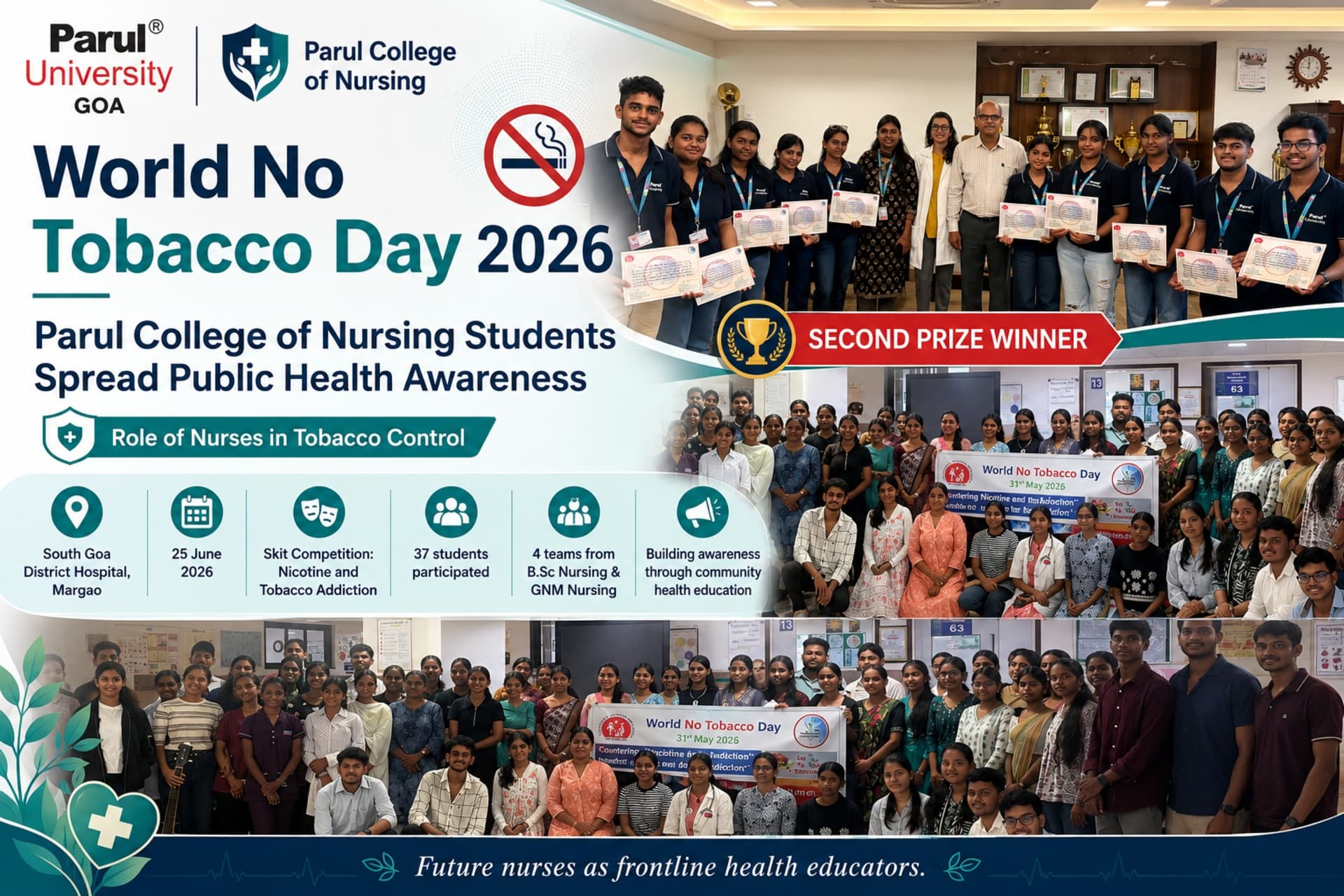 Events
World No Tobacco Day 2026: Role Of Nurses, Parul College of Nursing Students' Skit on Public Health Education.
August 5, 2026Nurses are among the most effective frontline health educators in tobacco control, because they reach patients and communities directly. On 25 June 2026, Parul College of Nursing students demonstrated that role at a World No Tobacco Day competition in a South Goa hospital, and took the Second Prize.
Read More