
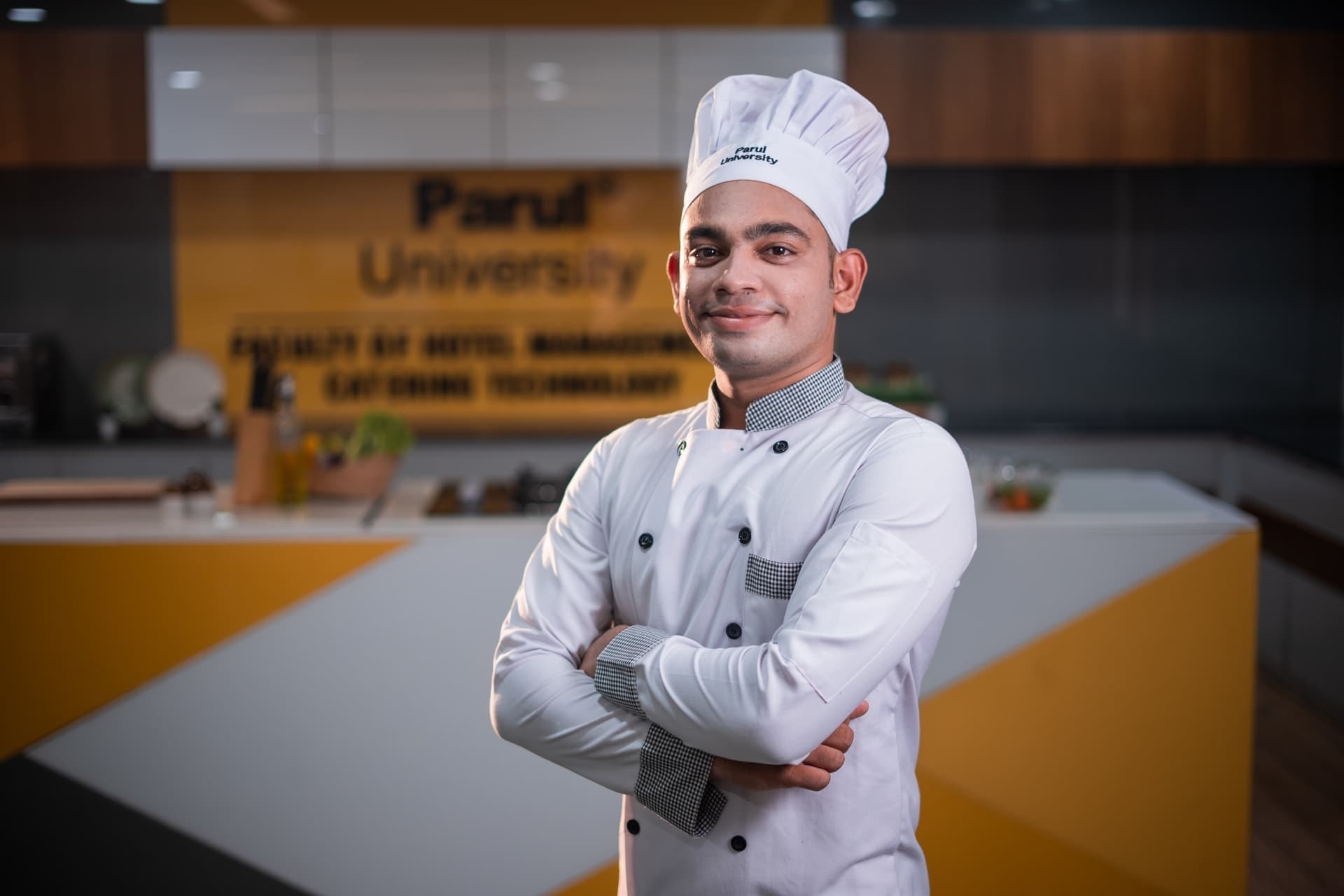
Inside Goa's Hospitality Boom: What a BHMCT Student Actually Learns in Year One
The first year of a BHMCT programme usually introduces students to the core areas of hotel operations, including food production, food and beverage service, front office, housekeeping, and professional communication. Studying in Goa can also place students close to an active tourism and hospitality environment.
Goa's tourism economy gives hospitality students an interesting environment in which to understand how hotels, restaurants, resorts, events, and guest services operate. According to the Goa Economic Survey 2025–26, the state received more than 10.8 million tourists in 2025 and had 9,005 registered hotels with over 77,000 rooms as of March 2025.(Source)
For students considering a hotel management course in Goa, however, the first question is often more basic: what do you actually study once the course begins?
What Is BHMCT?
BHMCT stands for Bachelor of Hotel Management and Catering Technology. It is an undergraduate programme designed around the operational and management sides of hospitality.
Students considering BHMCT in Goa should expect a combination of classroom learning and practical training. Instead of studying hospitality only from textbooks, students gradually learn how different parts of a hotel or food-service business work together.
The first year usually creates this foundation before students move towards more advanced operations, management, and industry exposure.
What Does a BHMCT Student Learn in the First Year?
The exact subjects can vary between universities, but the first year generally introduces the main operational departments of hospitality.
Food Production
Students begin learning how professional kitchens operate. This can include basic cooking techniques, kitchen organisation, ingredients, hygiene, food safety, and introductory preparation methods.
The objective is not simply to learn recipes. Students start understanding how commercial kitchens manage quality, time, cleanliness, and consistency.
Food and Beverage Service
This area introduces restaurant and service operations.
Students may learn about table setup, different styles of service, menu knowledge, guest interaction, and the basic functioning of restaurants and banquet services.
It helps students understand that hospitality depends as much on service experience as it does on the product being served.
Front Office Operations
The front office is often the first point of interaction between a hotel and its guests.
First-year learning generally covers areas such as reservations, guest arrival and departure, communication, and basic front-desk procedures.
Students interested in guest relations and hotel operations may find this area particularly relevant.
Housekeeping
Housekeeping is closely connected with cleanliness, room presentation, maintenance standards, and guest comfort.
Students learn the basics of room preparation, cleaning procedures, linen management, and maintaining hospitality spaces.
Together, these subjects give beginners exposure to the main operating areas of a hotel.
Why Are Communication and Professional Skills Important?
Hospitality is highly people-focused.
A student may understand hotel operations well, but professional communication, teamwork, time management, and guest handling are equally important.
The first year therefore also helps students begin developing confidence in interacting with guests and colleagues. These skills can later support different hospitality careers in Goa, where employees may regularly interact with visitors from different regions and countries.
Is BHMCT Only for Students Who Want to Work in Hotels?
No. Hotel management education can lead towards several parts of the wider hospitality and service industry.
Depending on their education, training, and experience, graduates may explore opportunities in:
● Hotels and resorts
● Restaurants and food services
● Event and banquet management
● Cruise hospitality
● Tourism businesses
● Corporate hospitality
● Entrepreneurship
Students may later prefer specific areas such as food production, front office, food and beverage, events, or broader hotel operations.
How Is B.Sc. Hotel Management Different from BHMCT?
Students researching B.Sc Hotel Management Goa options may notice that both programmes cover hospitality, but their structure and duration can differ.
BHMCT commonly provides a broader four-year pathway combining hotel management and catering technology. A B.Sc. Hotel Management programme may provide a three-year route focused on hospitality and hotel operations.
Neither option should be selected only on duration. Students should compare the curriculum, practical learning, internships, eligibility, and the kind of hospitality role they may want to pursue.
What Hotel Management Programmes Does Parul University Goa Offer?
Students comparing hotel management colleges in Goa can consider both BHMCT and B.Sc. Hotel Management at Parul University Goa.
The university currently lists a four-year BHMCT and a three-year B.Sc. Hotel Management, along with a four-year B.Sc. (Hons.) Hotel Management pathway. Its Faculty of Hotel Management also highlights practical exposure across hospitality functions and internship opportunities within the programme structure.
Both BHMCT and B.Sc. Hotel Management accept students from Science, Commerce, or Arts backgrounds, subject to the stated eligibility conditions.
Why Can Goa Be Relevant for Hospitality Students?
Hospitality learning becomes easier to understand when students can connect classroom concepts with how the industry works around them.
Goa's hotels, resorts, restaurants, events, tourism businesses, and international visitor base create a setting where students can observe different hospitality formats and service expectations.
For someone researching a hotel management course in Goa, this wider environment can therefore be an important consideration alongside curriculum and campus facilities.
How Should Students Prepare for Hotel Management Admission?
Students exploring hotel management admission Goa options should first compare eligibility, programme duration, course structure, practical training, fees, and internship exposure.
They should also consider whether they prefer the broader four-year BHMCT route or a B.Sc. Hotel Management pathway.
The first year is designed to introduce several areas before students develop stronger preferences. For beginners, that exposure can be useful because it allows them to understand hospitality from the kitchen to the front desk before deciding which direction suits them better.
Frequently Asked Questions
Can students from Commerce or Arts pursue BHMCT?
Does BHMCT include practical training from the first year?
What careers can follow a hotel management degree?
Latest Articles
 Careers
B.Sc Nursing vs GNM in Goa: Eligibility, Duration, Fees and Career Paths Compared
October 26, 2026|Nishant MishraB.Sc. Nursing and GNM can both lead to nursing careers, but they differ in academic level, eligibility, duration, fees, and long-term study pathways. Students should compare these factors before choosing a programme.
Read More Academic
Goa's First State Private University: What It Changes for Students Choosing Where to Study
October 24, 2026|Sritoma BhattacharyaThe arrival of Goa’s first state private university gives students another higher-education model to consider alongside public universities, national institutes, and colleges, with programmes spanning technology, management, healthcare, hospitality, and applied sciences.
Read More
Related Articles
 Academic
Complete Guide to BHMCT Course: Subjects, Fees & Duration
August 3, 2026BHMCT course details show it is a 4-year program that trains students for hotel and hospitality jobs with practical skills and simple eligibility.
Read More Admissions Tips
Admission Process for Hotel Management Courses
August 3, 2026The hotel management admission process is a simple process starting with form filling and ending with final selection.
Read More